The Hub-and-Spoke System
To understand the role of a feeder vessel, one must first understand how ocean carriers manage cargo routing. Rather than sailing a 20,000 TEU ship point-to-point between dozens of small cities—an impossible task due to draft restrictions and horrific inefficiency—carriers employ a hub-and-spoke model.
Massive mainline vessels (the ULCVs and Neo-Panamaxes) drop thousands of containers at strategic mega-hubs like Singapore, Rotterdam, or Jebel Ali. From there, smaller, highly maneuverable ships—the feeders—distribute these containers to their final destinations along coastlines and up river systems. They are the essential "last mile" delivery trucks of the ocean.
Defining the Feeder Class
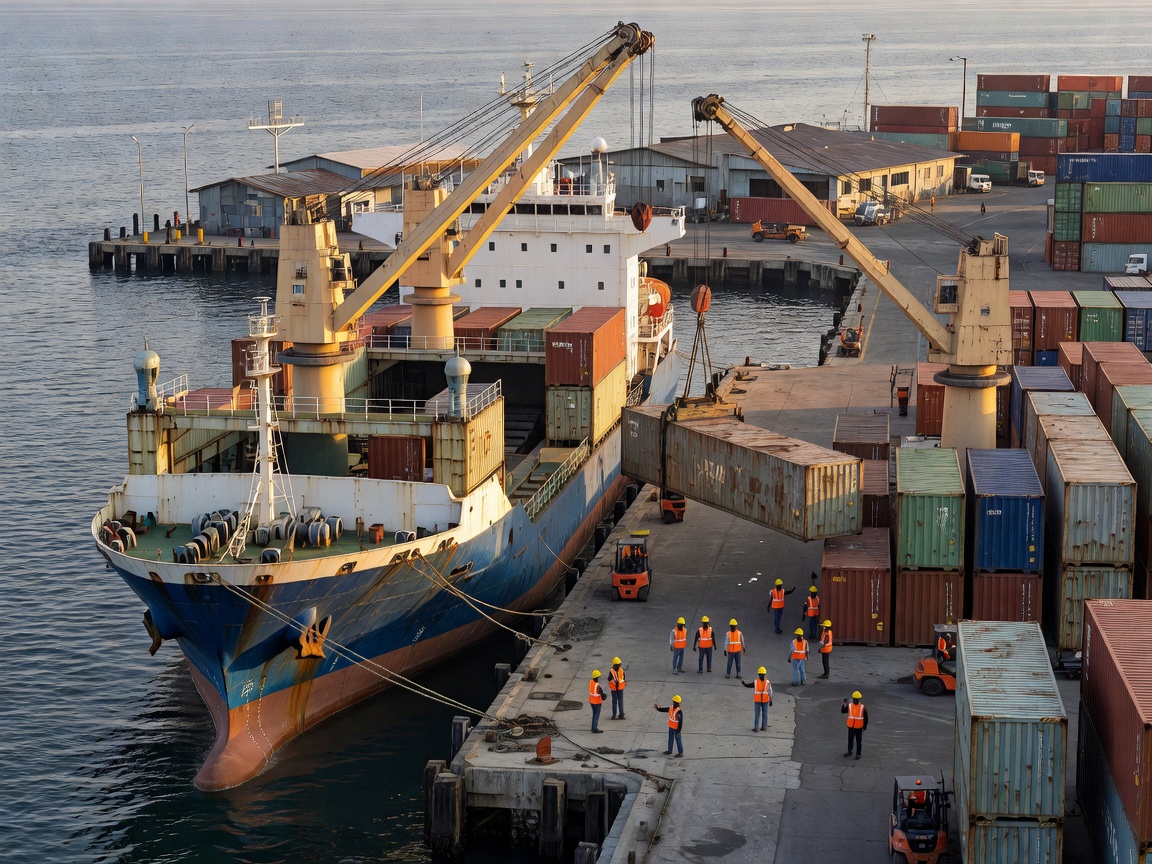
Feeder ships are defined primarily by their small size and shallow draft. They typically carry anywhere from 300 to 3,000 TEU. Because they frequently call at underdeveloped ports that lack modern Ship-to-Shore (STS) gantry cranes, many feeder vessels are "geared."
Being geared allows a feeder to operate autonomously in tertiary ports. While onboard cranes are slower than massive shore-based infrastructure, they provide the ultimate operational flexibility, enabling global trade to reach regions with minimal maritime investment.
Categories of Feeder Vessels
| Sub-Class | Capacity Range | Typical Operational Profile |
|---|---|---|
| Small Feeder | Up to 1,000 TEU | Coastal hops, river navigation, island supply chains. |
| Feedermax | 1,000 - 2,000 TEU | Intra-regional trade (e.g., Intra-Asia, Mediterranean loops). |
| Sub-Panamax | 2,000 - 3,000 TEU | Connecting major regional hubs, high-volume secondary ports. |
Operational Challenges
Operating a feeder network is arguably more complex than managing long-haul deep-sea routes. Feeder operators must perfectly synchronize their schedules with the arrival of mainline vessels. If a mega-ship is delayed by severe weather in the Pacific, a dozen feeder schedules in Southeast Asia must be immediately adjusted to prevent cargo gridlock at the hub.
Furthermore, feeder vessels spend a vastly disproportionate amount of their time in port compared to deep-sea ships. A ULCV might spend 25 days at sea and 3 days in port. A small feeder might do a 12-hour sea transit followed by 24 hours of port operations. Because port fees are calculated by time and tonnage, managing port dwell times is the critical metric for feeder profitability.
The Green Feeder Revolution
Interestingly, because feeder vessels operate on short, predictable loops near coastal infrastructure, they are prime candidates for early electrification and alternative fuel adoption. Shorter ranges mean the lower energy density of batteries or green hydrogen is less of a barrier.
Several maritime operators have already launched fully autonomous, battery-electric feeder vessels operating short domestic routes (such as in Norwegian fjords), signaling that the feeder segment may decarbonize much faster than the deep-sea fleet.