Introduction to the Megamax Era
The pursuit of absolute efficiency in maritime logistics has driven naval architecture toward unprecedented dimensions. Ultra-Large Container Vessels (ULCVs) generally represent ships capable of carrying more than 14,500 Twenty-foot Equivalent Units (TEU). However, the newest iterations—often termed "Megamax-24" vessels—routinely exceed 24,000 TEU.
These floating monoliths are designed for a single overarching purpose: minimizing the slot cost (the cost to move a single container) across massive distances. By concentrating cargo on a single hull, carriers drastically reduce fuel consumption and operational expenditure per unit. They operate exclusively on the highest-volume routes, primarily the Asia-Europe trade lane.
Technical Specifications & Dimensions
Designing a ULCV is an exercise in managing extreme physical constraints. While lengths have largely plateaued around the 400-meter mark (to remain manageable in major straits and turning basins), capacities continue to increase through wider beams and deeper drafts.
| Specification | Standard ULCV (circa 2015) | Megamax-24 (Current) |
|---|---|---|
| Length Overall (LOA) | ~395 meters | ~400 meters |
| Beam (Width) | 59 meters (23 rows) | 61.5 meters (24 rows) |
| Maximum Draft | 16.0 meters | 17.0 meters |
| Capacity (TEU) | ~18,000 | 24,000+ |
The Port Infrastructure Paradox
The operational efficiency of a ULCV at sea creates severe chokepoints when it arrives at port. To accommodate vessels of this scale, port authorities must execute massive capital expenditures. Dredging channels to 17 meters or more is environmentally complex and financially exorbitant.
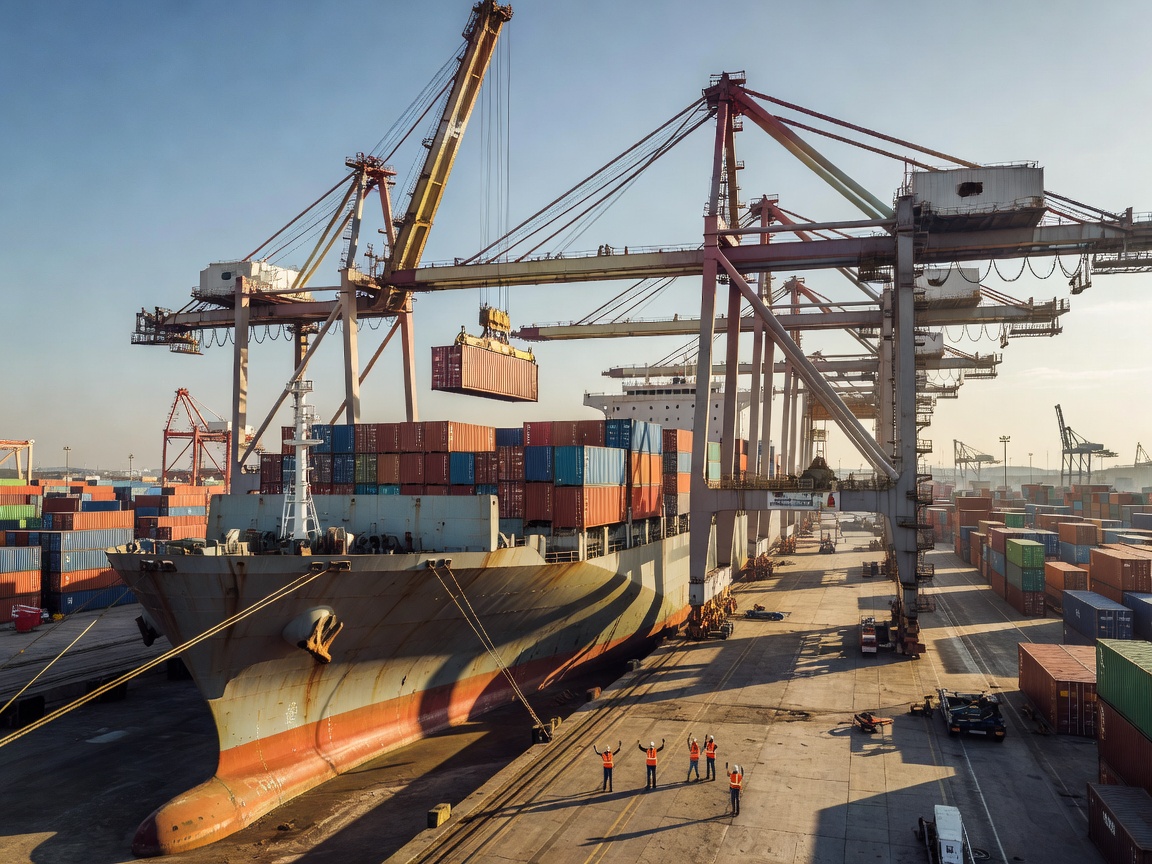
Furthermore, the physical dimensions require Ship-to-Shore (STS) gantry cranes capable of reaching across 24 rows of containers. A single ULCV discharging 10,000 TEU in one call creates a localized "cargo surge," instantly overwhelming terminal yards, truck gates, and local rail networks. The efficiency gained on the ocean is frequently eroded by congestion at the terminal.
Pros and Cons of the ULCV Class
Advantages
- Economies of Scale: Lowest possible per-TEU transit cost.
- Emissions Efficiency: When fully loaded, they produce the lowest carbon emissions per container moved.
- Slot Capacity: Allows alliances to maximize throughput on fixed weekly schedules.
Disadvantages
- Inflexibility: Cannot navigate the Panama Canal, restricting them from trans-Pacific routes to the US East Coast.
- Port Limitations: Only a select few global hubs have the draft and cranes required to handle them.
- Cargo Risk: A localized incident (e.g., a grounding or fire) puts an immense volume of global inventory at risk simultaneously.
Future Trajectory
Naval architects suggest that the physical limitations of the hull are approaching their zenith. Expanding the beam beyond 24 rows complicates structural integrity, particularly regarding torsional stress (the twisting of the hull in heavy seas). Additionally, the insurance sector has raised concerns regarding the concentration of risk and the near-impossibility of salvaging a fully loaded Megamax vessel in distress.
Consequently, rather than focusing on building 30,000 TEU ships, the industry is pivoting. The next generation of ULCVs will retain current dimensions but will feature radically redesigned propulsion systems tailored for alternative fuels such as green methanol and ammonia, prioritizing decarbonization over pure dimensional growth.