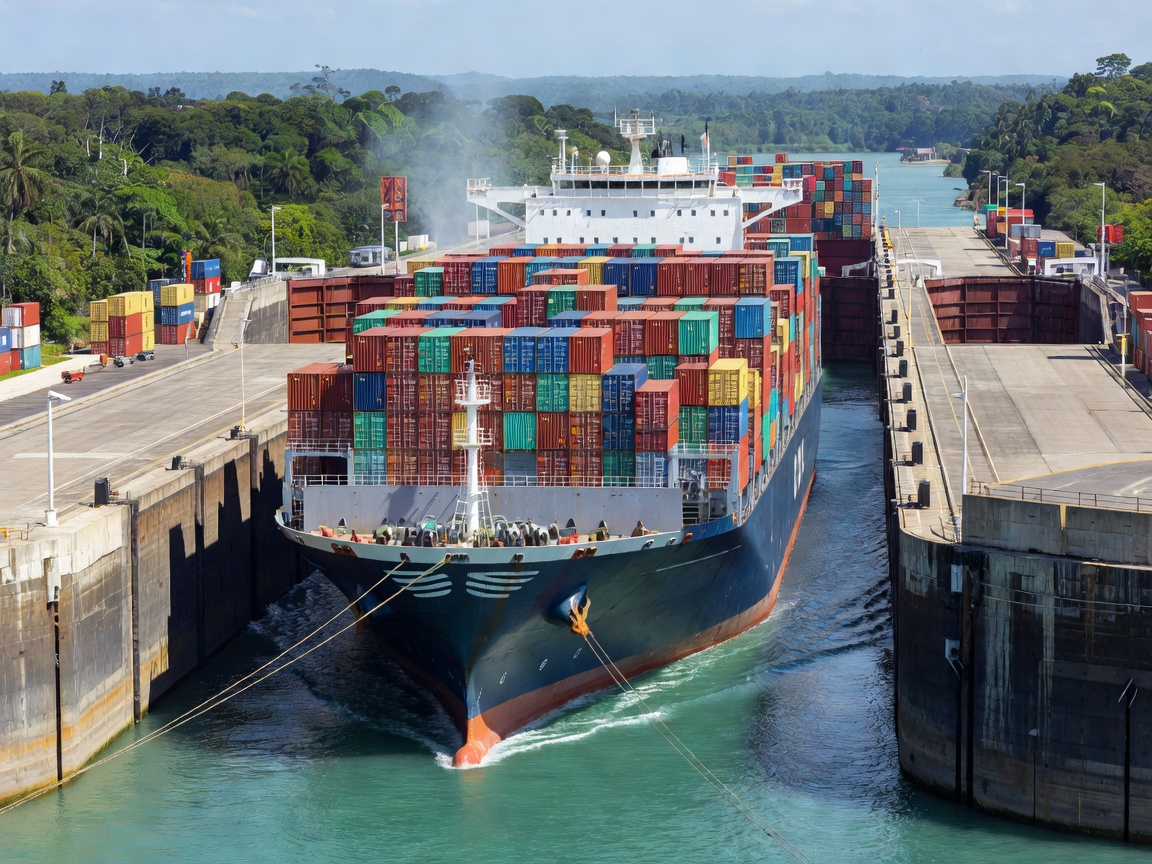
Geography Dictating Architecture
In maritime shipping, few geographic features have influenced naval architecture as profoundly as the Panama Canal. For nearly a century, the canal's lock dimensions created a hard limit on the size of ships traversing between the Atlantic and Pacific oceans. Vessels built to exactly fit these original locks are known as "Panamax" ships.
However, as global trade volumes exploded, the Panamax limit became a massive bottleneck. The 2016 expansion of the Panama Canal, which involved the construction of a much larger set of locks, birthed an entirely new standard: the "Neo-Panamax" (or New Panamax) class. This expansion fundamentally rewired global supply chains, particularly the routing of goods from Asia to the East Coast of the United States.
Dimensional Evolution
The transition from Panamax to Neo-Panamax unlocked a tremendous increase in cargo capacity without requiring vessels to abandon the crucial canal route.
| Measurement Limit | Classic Panamax | Neo-Panamax |
|---|---|---|
| Max Length | 294.13 meters | 366.0 meters |
| Max Beam | 32.31 meters | 51.25 meters |
| Max Draft | 12.04 meters | 15.2 meters |
| Typical Capacity | ~5,000 TEU | 12,000 - 14,500 TEU |
Operational Flexibility
While ULCVs are restricted to a handful of deep-water mega-ports, Neo-Panamax vessels offer a "sweet spot" of operational flexibility. They possess enough capacity to generate favorable economies of scale, yet their dimensions allow them to call at a vastly larger number of ports globally.
This versatility makes them the workhorses of the Trans-Pacific and Trans-Atlantic routes. If a carrier needs to quickly shift tonnage from an Asia-Europe route to an Asia-South America route due to fluctuating demand, a Neo-Panamax hull can easily be redeployed, whereas a ULCV cannot.
The Cascading Effect
The introduction of Neo-Panamax vessels caused a massive industry shift known as the "cascading effect." As these newer, 14,000 TEU ships entered service on major routes through the canal, they displaced the older 5,000 TEU Classic Panamax ships.
These older vessels were subsequently "cascaded" down into regional, North-South, or feeder routes. Consequently, many secondary ports that previously handled 2,500 TEU vessels suddenly had to upgrade their infrastructure to accommodate the 5,000 TEU Classic Panamax ships that had been pushed out of primary service.
Future Outlook and Environmental Pressures
The Neo-Panamax class is currently the most heavily ordered category in global shipbuilding. Because they offer the best balance of flexibility and capacity, carriers view them as lower-risk investments compared to ULCVs.
Furthermore, because the Neo-Panamax fleet is relatively young, it is serving as the primary testbed for dual-fuel engines. Shipowners are increasingly ordering these vessels with LNG or methanol-ready configurations, ensuring that the workhorses of global trade will also lead the charge toward regulatory emissions compliance over the next two decades.