The Death of the Traditional Reefer Ship
Historically, perishable goods such as bananas, meat, and dairy were transported on dedicated "reefer ships." These were specialized vessels featuring heavily insulated cargo holds and massive, centralized refrigeration plants. Cargo was loaded via pallets directly into the chilled hull.
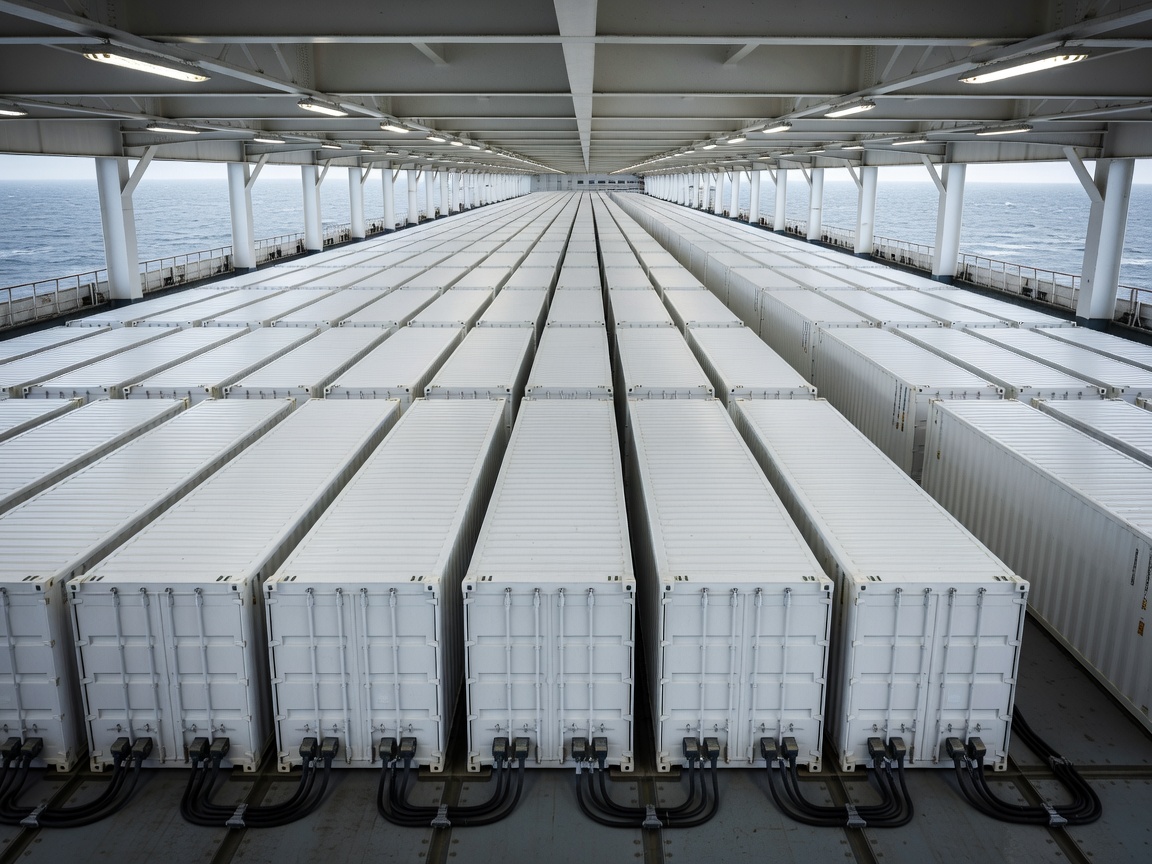
Today, the dedicated reefer ship is nearly extinct. It has been entirely superseded by the refrigerated container (the "reefer box") carried aboard standard cellular container ships. This transition allowed perishables to integrate seamlessly into the standard intermodal supply chain, moving from a farm in South America to a supermarket in Europe without the product ever leaving its temperature-controlled box.
Vessel Power Requirements
While modern ships do not have refrigerated holds, they must supply massive amounts of electrical power to the individual containers. A single 40-foot reefer container can draw up to 15 kilowatts of power during its initial pull-down phase.
When a large Neo-Panamax vessel is equipped with 1,500 to 2,000 "reefer plugs," the aggregate electrical load is staggering. To support this, ships operating on heavy perishable routes (such as South America to Asia) are fitted with auxiliary diesel generators solely dedicated to satisfying the hotel load of the cargo.
Atmospheric Control Technology
Modern reefer operations extend far beyond simple temperature reduction. High-value perishables require Controlled Atmosphere (CA) technology.
- O2/CO2 Regulation: CA containers actively monitor and manipulate oxygen and carbon dioxide levels. By lowering oxygen, the respiration rate of fruit is slowed, artificially delaying the ripening process.
- Ethylene Scrubbing: Certain fruits (like bananas and avocados) produce ethylene gas as they ripen, which triggers surrounding fruit to ripen faster. Advanced reefers use filters and scrubbers to remove ethylene from the circulated air.
- Humidity Control: Dehumidification systems prevent mold growth on delicate cargo like electronics or pharmaceuticals, while retaining moisture for fresh produce.
Stowage and Heat Dissipation
Loading reefer containers presents unique challenges for the ship's chief mate. Reefers cannot be buried deep within a stack surrounded by dry boxes. The refrigeration unit on the end of each container expels significant ambient heat. If too many reefers are stowed close together below deck without adequate ventilation, the localized heat buildup can cause the compressors to fail.
Consequently, reefers are typically stowed on deck or in specialized, actively ventilated under-deck bays. They must also be positioned to allow the crew access for daily physical temperature checks, ensuring no single unit has tripped its breaker during heavy weather.
The Future of the Cold Chain
The reefer market is experiencing rapid digitization. New containers are equipped with IoT (Internet of Things) sensors communicating via satellite, allowing shippers to monitor temperature, humidity, and location in real time from a smartphone. If a compressor begins to fail mid-ocean, remote diagnostics can alert the ship's engineers to replace a specific part before the cargo spoils, radically reducing insurance claims and food waste.